
The Montessori Education Program
The Casa dei Bambini Years (Ages 3-6)
Maria Montessori noticed something about children this age: they want to work. Not play in the usual sense — real tasks, done with a real purpose, repeated until they're mastered. Our program is built around that.
A Classroom That Teaches Itself
There are no rows of desks facing a teacher here. Instead, low shelves, child-sized furniture, and materials a child can reach, choose, and put away without help. Each material is designed to teach one thing at a time, so a child can work it out without an adult explaining it to them.
Our guides don't lecture. They demonstrate a piece of work once or twice, then step back and let the child take it from there.
Mixed Ages, By Design
Three-year-olds and six-year-olds share a classroom, and that's intentional. Younger children learn by watching older ones work. Older children practice patience and leadership by helping the younger ones.
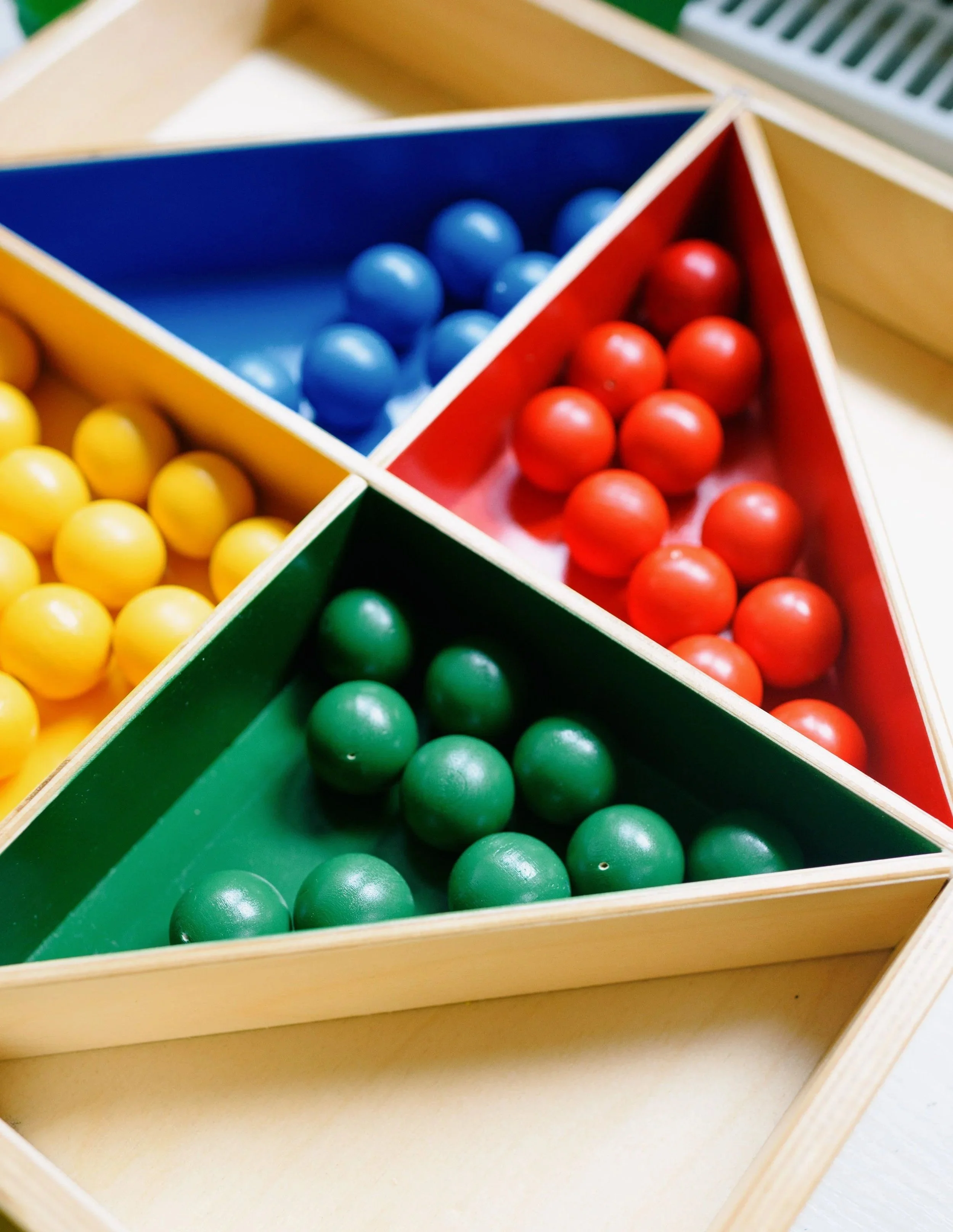
From Concrete to Abstract
We spend more time asking what a child can do on their own than what they can be told. That means real choices, inside a classroom set up to make good choices possible, not chaos, not chores dressed up as freedom, just genuine responsibility scaled to a child's age. By the time our students move on to primary school, they know how to concentrate, how to finish what they start, and how to work alongside other children.
Our goal is to create a positive, encouraging environment where every child feels capable, supported, and excited to learn.
How this shows
up in our
classroom
Language and early literacy, moving at each child's pace from sound to symbol to word.
Long stretches of uninterrupted work time, because concentration shouldn't get cut off by a bell.
Practical life work such as pouring, buttoning, sweeping. This builds focus and care before it builds academic skill.
Math grounded in physical materials, long before numbers show up on paper.
Sensorial materials for comparing, sorting, and making sense of the physical world.